REVIEW: Superman vs. The Amazing Spider-Man Facsimile Edition #1
50 years ago, DC and Marvel Comics came together for their first superhero crossover. It was a no brainer who they would be using –their most popular characters and pop culture icons Superman and Spider-Man. Written by the man who defined the Bronze Age of comics, Gerry Conway, and art by Ross Andru as well as editing by Stan Lee at Marvel and Carmine Infantino at DC. In addition to the original story, this anniversary edition comes with letters from the editors, art behind the cover, and more.
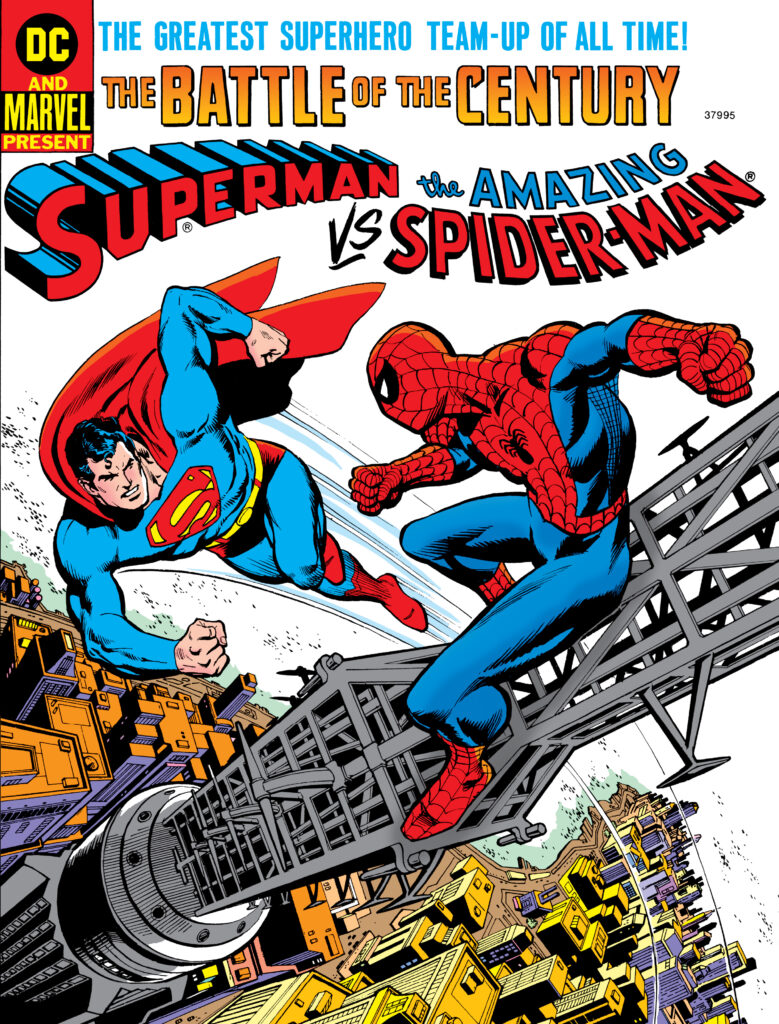
Carmine Infantino ran DC during the Silver Age. So, when his cover with colors by Ross Andru and inks by Dick Giordano hit the market, it had people questioning whether it was real or not. Today’s it’s one of the most iconic comic books covers when it comes to intercompany crossovers. It let the world know that having all our favorite characters together was possible. Superman was still DC’s best-selling comic and Spider-Man had just made history by bringing the Silver Age to a close with the Death of Gwen Stacy (also by Conway) and was changing the game as a new type of superhero. This cover is definition of worlds collide.
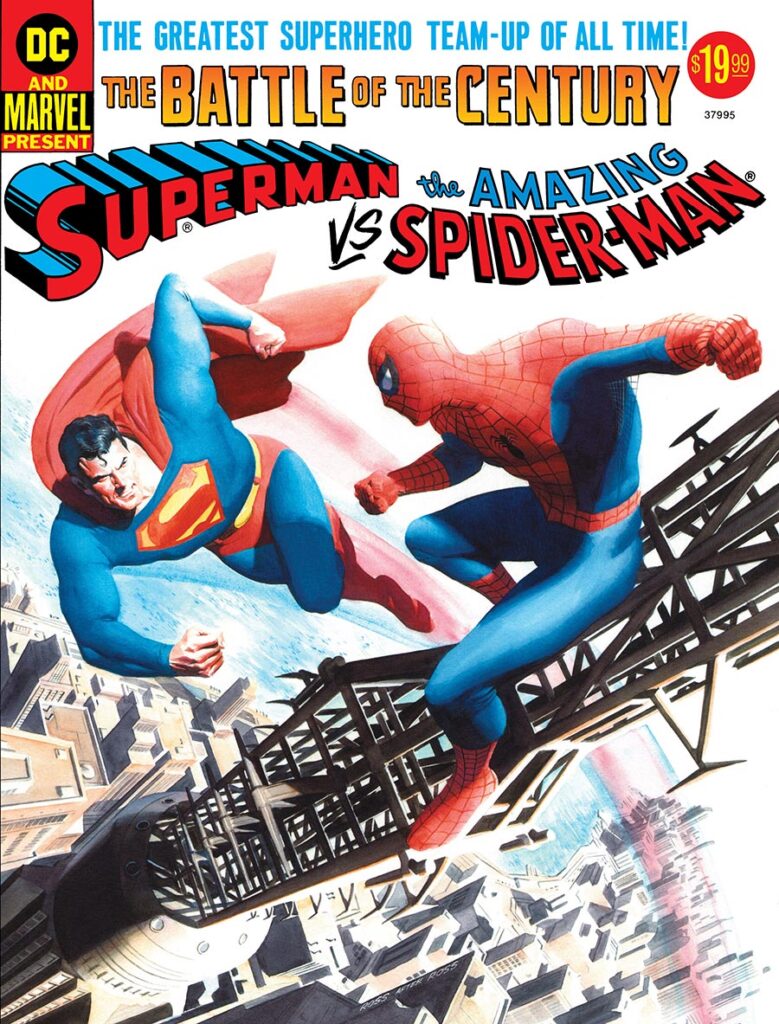
Of course, Alex Ross had grown up with this comic and it was only a matter of time before he did his own illustration of the cover. Now, it’s finally official as a variant cover for this special edition of the comic that inspired it. Everything is brought to that glorious photo-esque realism. I’m seeing details about the city I didn’t notice before like what could be the Hudson alongside Manhattan.
What’s interesting here is that there’s no interdimensional travel or different universes. It’s just Superman and Spider-Man as they are in the same world, they just have never met. With Peter with Mary Jane, this is around four years after Gwen died. Superman, at this time, had his world expanded on with the introduction of Supergirl and Krypto. Superman stories also began to take place on other worlds and in more fantastical setting. As such, Lex Luthor was more chaotic in a campy criminal way with his ray gun and purple and green suit. That is how this story starts, with a battle against Lex Luthor in Metropolis. Meanwhile, Spider-Man takes on Doctor Octopus in New York. Both are sent to the same prison and decide to team up.
Clark and Lois are then sent by The Daily Planet to report on a new satellite they can change the climate being launched in New York. Lois meets Spider-Man after he saves her after a fall. However, Lex Luthor shows up with one of his ray weapons and teleports Lois and Mary Jane away. Since Spider-Man was the last one she was with and the local paper doesn’t seem too keen on him, Superman head after him. A one-sided fight at first glance, but a blast from red sun radiation from Lex Luthor will set that right.
Having written for Superman, Superboy and the Legion of Super-Heroes, and The Superman Family, as well as being one of the foremost Spider-Man writers, Gerry Conway was the man for the job. This comic came at a time of transition from the Silver Age to the Bronze Age. As such, there’s some elements of the retro pageantry of superheroes. Before he grew grittier in Bronze Age, Lex Luthor almost felt like a trickster character as an evil genius –he had nearly as much gadgets as Batman! With Superman and Spider-Man it’s a meeting of heroes from different times that manages to feel organic. Of course, the fight is well handled, and the ensuing adventure is what every child envisioned playing with their action figures. Of course, we love our notes from Stan Lee.
Old comics truly felt like movies with how they were paced between panels. Bob Wiacek and Gaspar Saladino with colors by Jerry Serpe must’ve heard that this crossover was intended to be a movie and rather than comic panels, they approached it as story boards. Compared to DC K.O., a comic series that is all about fights, this comic from 50 years ago offers some more in-depth sequences. In uncredited artist roles are legendary artist from DC and Marvel with Neal Adams and John Romita Sr. respectively. Adams helped redraw Superman figures around the time he had submitted the cover for Superman Kryptonite Nevermore while Romita Sr. helped revised Spider-Man. That goes to show how dedicated each publisher was to best represent their heroes.
(10/10) What’s great about Superman vs. The Amazing Spider-Man as we revisit it 50 years later is its place in time, how it let comic book companies know that collaboration is an option, and how the first superhero of the Golden Age and the newest superhero of the Silver Age came together to ring in the Bronze Age.