REVIEW: Justice League Unlimited #17
Justice League Unlimited #17, “Aftermath: Part One,” picks up immediately after Superman defeats Darkseid in DC K.O. #5. If you haven’t read that issue yet, go do that as soon as possible—it’s worth it. Even if you haven’t, this issue does a great job of bringing readers up to speed while grounding us in the emotional and physical aftermath of that massive, reality-shaking battle.
Writer Mark Waid—one of my favorite comic book writers, easily in my top three—teams up with artist Clayton Henry, colorist Tamra Bonvillain, and letterer Ariana Maher to drop us right into the fallout of a time-spanning war between good and evil. From the very first pages, you feel it. Not just the scale… but the weight. The creative team pulls readers into the story while reminding us that some heroes stayed behind to protect Earth, while others competed in the King Omega Tournament. Now, those who returned—heroes and villains alike—don’t feel triumphant. They feel… changed. Waid and the team present them like survivors of war. You can see it in their faces, their body language, and in the silence between words. These aren’t characters celebrating a win—they’re processing something they don’t fully understand yet.
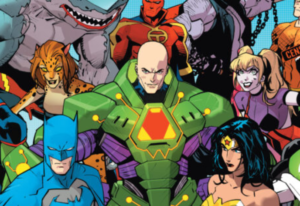
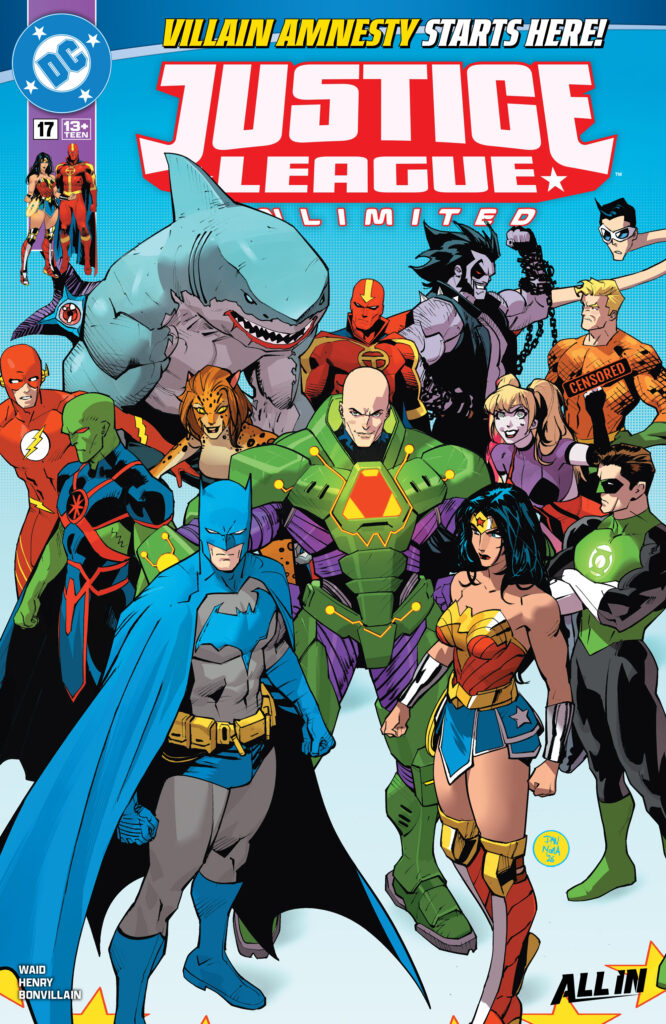
Before we dive deeper into the issue, let’s talk about the covers. You can always count on Dan Mora to deliver. His cover showcases the new dynamic of the Justice League following Superman’s victory. Lex Luthor is strategically—and devilishly—positioned exactly where Superman would normally stand, right between Batman and Wonder Woman. That visual alone tells a story. Add in characters like King Shark, Lobo, Cheetah, and Harley Quinn—who is hilariously censored for flipping the bird—and you instantly feel how out of place everything is. And yet, right there on the cover, it says: “Amnesty Starts Here!” That phrase sets the tone for everything this issue is wrestling with.
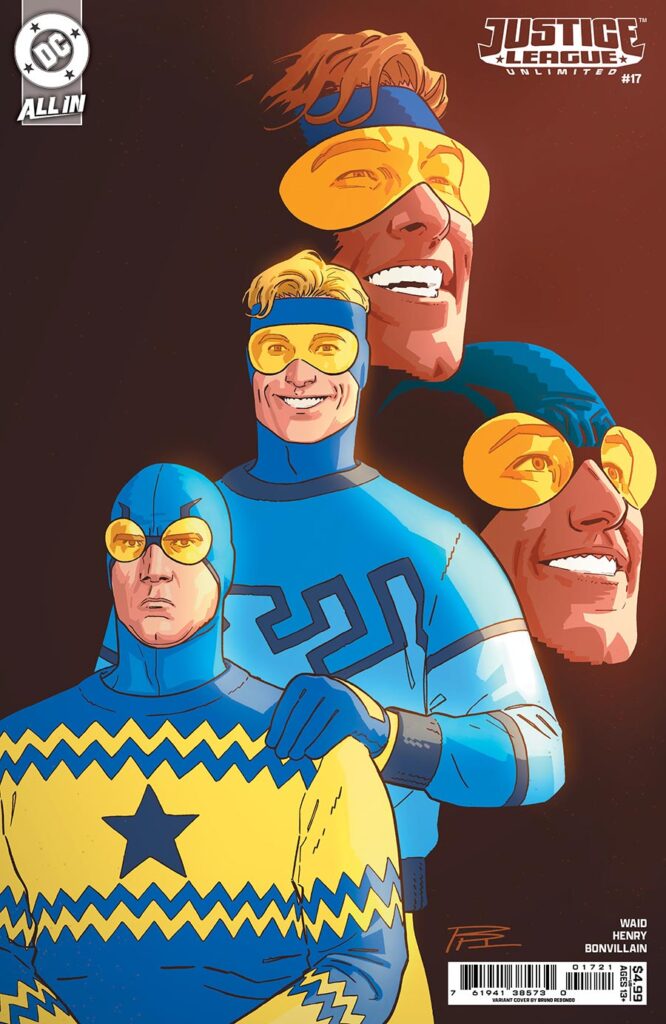
I absolutely love Bruno Redondo’s variant cover, which mirrors the iconic poster for Step Brothers (2008), starring Will Ferrell and John C. Reilly. Blue Beetle looks fed up wearing a Booster Gold sweater, while Booster proudly wears a Blue Beetle one. In the headshots, they both look gleefully happy like nothing is wrong. It’s comedic, nostalgic, and for me personally, it hit home. As an ’80s kid, I have those same department store-style portraits with my baby sister—except thankfully, we were both smiling. This cover brought back some genuinely good memories.
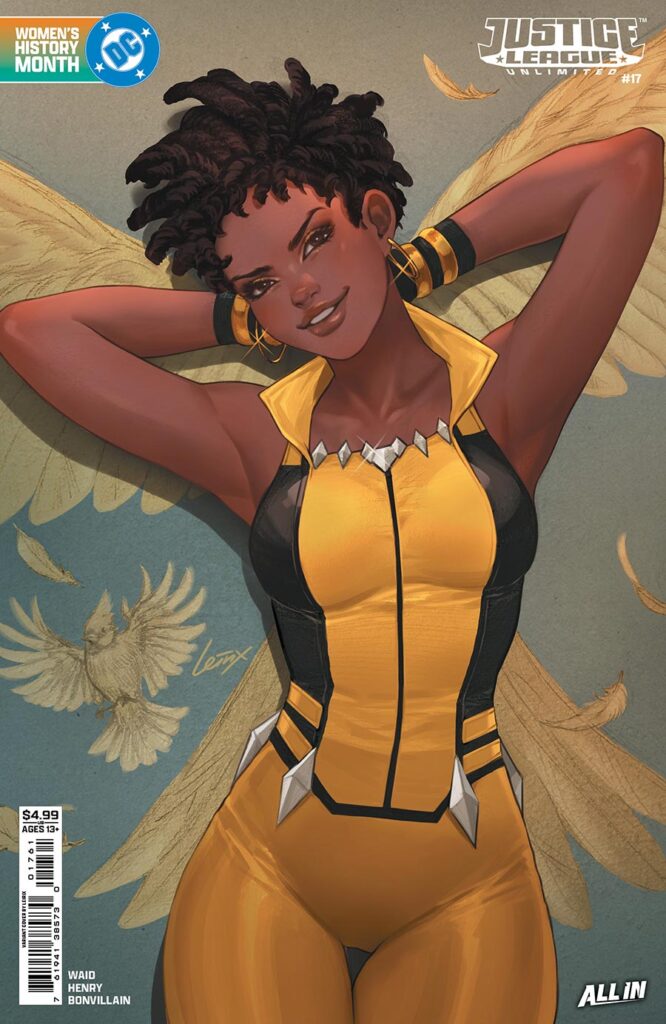
Now, there were other covers that caught my attention, but anytime I see Vixen on a cover, she wins. Lesley “Leirix” Li’s Women’s History Month variant stood out. The large dove wings and tail align perfectly behind Vixen, giving her a serene, commanding presence. I initially thought the bird was a canary, but everything pointed to it being a dove—which fits perfectly. Vixen looks calm and at peace, while the small, feisty dove beside her adds personality.
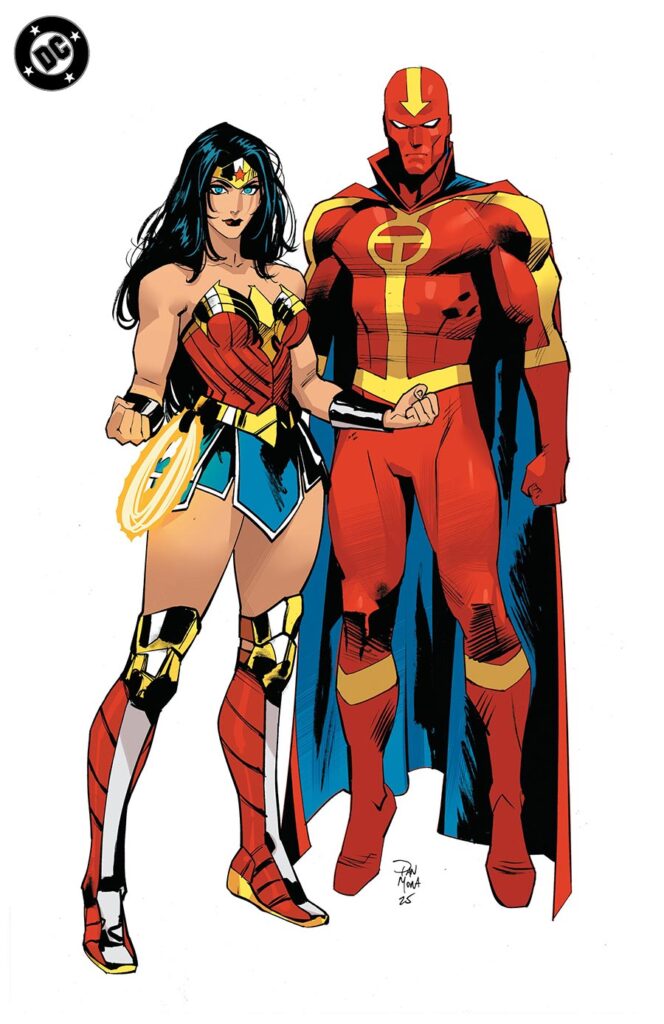
There are also variants available from Brian Bolland, Kevin Wada, Dan Mora, Stephen Byrne and Chrissie Zullo-Uminga.
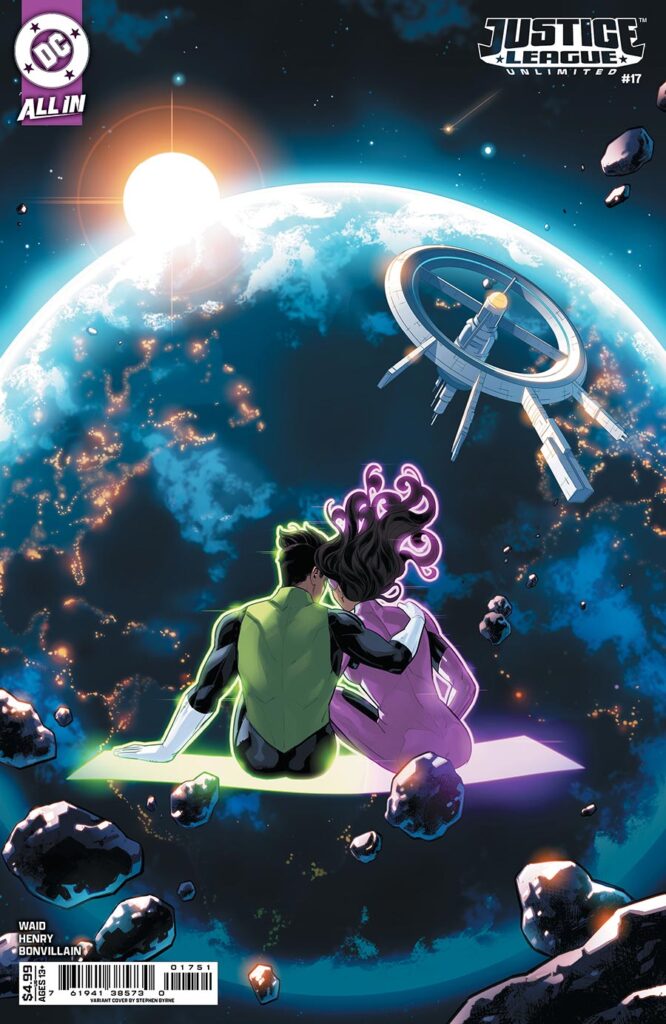
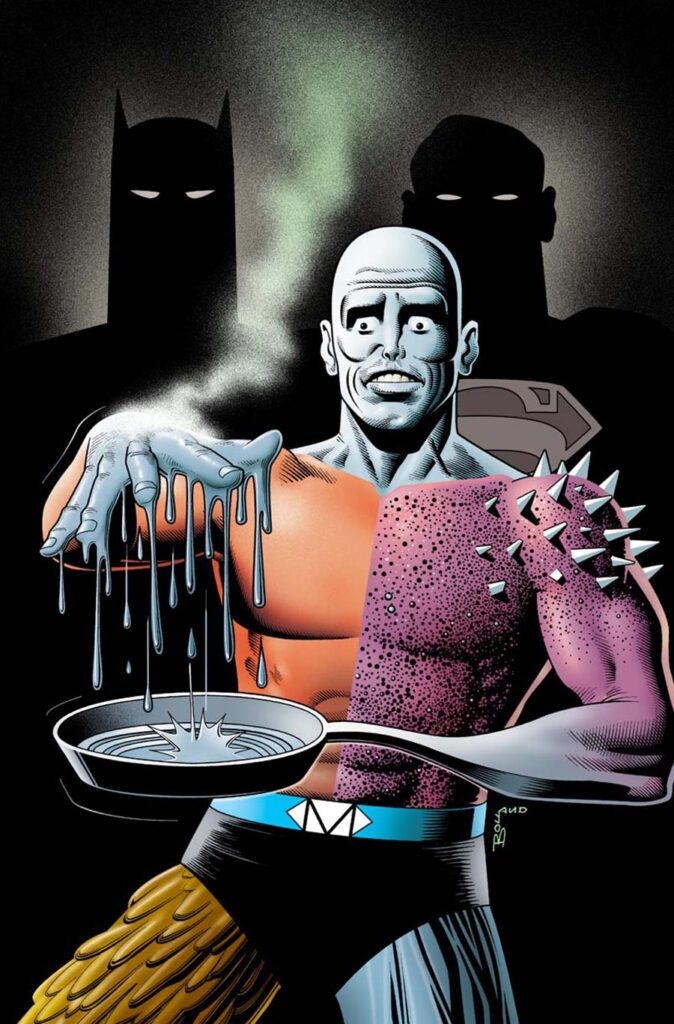
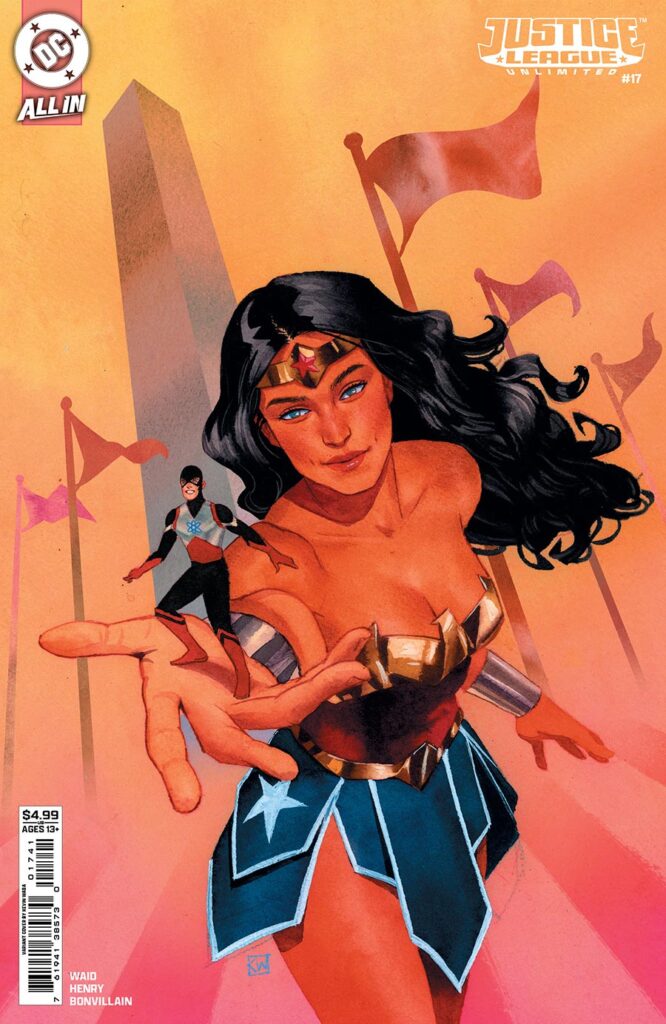
Mark Waid writes characters in a way that makes you feel like you truly know them. When the returning heroes meet with those who stayed behind, you don’t feel like you’re reading a scene—you feel like you’re in the room on the Justice League Watchtower. I especially love how Waid’s restraint, paired with Clayton Henry’s artwork, reveals how the tournament participants are dealing with the visions they received after Superman dispersed the Omega energy.
With Tamra Bonvillain’s colors and Ariana Maher’s lettering, the reader is fully immersed in this somber moment. The heroes aren’t just wondering where Superman is—they’re questioning everything. Why did he give up that power? Why share it? And what do these visions mean?
We also get a glimpse at the evolving hierarchy of the Justice League. At the top is the Trinity—Superman, Batman, and Wonder Woman—guiding the League forward. Then comes the next level, including Captain Atom and another “Captain,” which adds a subtle, clever touch of levity.
(10/10) Justice League Unlimited #17 doesn’t just deal with the aftermath—it lives in it. It shifts from spectacle to consequence and forces both heroes and readers to sit with what victory actually means. Mark Waid and this creative team deliver a thoughtful, emotionally grounded chapter that proves something important: The battle may be over, but the real story is just beginning.