BOOK REVIEW: Beyond the Cape – The Journey to James Gunn’s “Superman” Movie
For nearly ninety years, Superman has stood as one of the most enduring symbols of hope in popular culture. From the pages of Action Comics to television, film, and countless comic book adventures, the Man of Steel has been reimagined for each new generation. Whenever Hollywood decides to relaunch Superman on the big screen, it becomes more than just another superhero movie—it becomes a cultural moment.
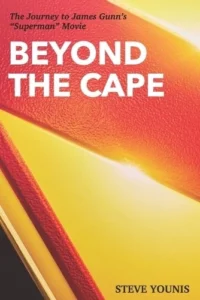
Steve Younis’s Beyond the Cape: The Journey to James Gunn’s “Superman” Movie attempts to document one of those moments—the long road that led to the release of James Gunn’s 2025 Superman film and the beginning of a new era for DC Studios.
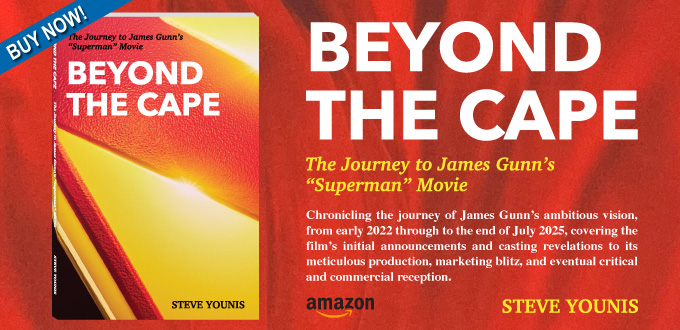
As someone who has followed Superman for most of my life through comics, television, and film, I always enjoy seeing books that explore the legacy and evolution of the character. Younis’s book chronicles the complicated path that led to Gunn’s Superman movie, which debuted in theaters in the summer of 2025 and is now available on streaming platforms and home media formats such as digital, DVD, and Blu-ray. Overall, the book succeeds in documenting a fascinating moment in the history of one of the world’s most recognizable heroes.
Younis, who is the owner and editor-in-chief of the Superman Homepage, begins his book in 2022, a turbulent time for DC Films as Warner Bros. Discovery reorganized its superhero strategy. One of the biggest developments during that period involved actor Henry Cavill. His brief return as Superman following a cameo in Black Adam initially thrilled fans, only for plans to change when James Gunn and Peter Safran were appointed as the new heads of DC Studios. The book carefully walks readers through this transition and explains how Gunn and Safran ultimately decided to move forward with a completely new direction for Superman. Rather than continuing the previous cinematic storyline, the studio chose to reboot the character and build a brand-new interconnected universe of films and television projects.
From there, Beyond the Cape traces the development of Gunn’s Superman film step by step—from early announcements and casting decisions to filming locations, costume reveals, and post-production updates. It is clear that Younis has a deep familiarity with the Superman franchise, and his dedication to documenting the process shows throughout the book. One of the most interesting aspects is the detailed look at the filmmaking process. Readers see how actors such as David Corenswet and Rachel Brosnahan were chosen to portray Superman and Lois Lane and how other DC characters were gradually added to the story. The book also highlights Gunn’s creative philosophy, particularly his desire to portray Superman as a symbol of hope, kindness, and compassion—traits that have defined the character since his earliest appearances.
Younis also emphasizes the film’s connection to Superman’s comic book legacy. Gunn has cited stories like All-Star Superman and Superman for All Seasons as key influences, suggesting that the movie sought to balance respect for nearly ninety years of storytelling with a modern interpretation of the character. Now that the film has already been released and audiences have had the opportunity to experience Gunn’s vision—whether in theaters or later through streaming and home media—the book provides an interesting look back at the anticipation and speculation that surrounded the project before it reached the screen.
At the same time, Beyond the Cape highlights just how complicated blockbuster filmmaking has become. Younis documents the many moving pieces involved in bringing a major superhero film to life, from studio decisions and marketing campaigns to filming logistics, visual effects planning, and fan reactions that unfold across social media. However, while the book is very thorough in documenting the timeline of events surrounding the film’s production, I did find myself wishing it included more of Steve Younis’s personal perspective as a Superman fan.
Much of the information in the book comes from media reports, press releases, interviews, and entertainment news coverage. As a result, the book sometimes reads more like a detailed historical record of the film’s development than a personal narrative.
That approach certainly has value—especially for readers who want a comprehensive timeline of how the movie came together. Still, I couldn’t help thinking the book might have been even more compelling if Younis had shared more of his own reactions and opinions along the way. As someone who has spent years covering Superman through his website, his personal thoughts on the casting choices, the direction of the story, and the overall creative vision would have added another layer of depth to the book.
Similarly, the book might have been even stronger if it had included interviews by Younis with some of the people involved in the movie—actors, producers, designers, or even James Gunn himself. Hearing directly from those involved in the filmmaking process could have given readers a more intimate look at the creation of the film instead of relying so heavily on previously reported information.
(9/10) Even so, Beyond the Cape remains an informative and enthusiastic look at an important moment in Superman’s cinematic history. The book captures the anticipation surrounding the launch of a new DC Universe and the enormous expectations placed on the Man of Steel as its foundation.
Beyond the Cape is available to purchase right now from Amazon.