REVIEW: Justice League Unlimited #18
Justice League Unlimited #18, “Aftermath: Part Two,” dives deeper into the unification of heroes and villains during the Villains Amnesty story arc, brought to life by the talented team of master superhero writer Mark Waid, artist Clayton Henry, colorist Tamra Bonvillain, and letterer Ariana Maher.
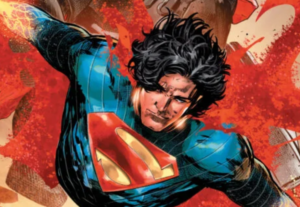
The ramifications of Superman’s victory over Darkseid in DC K.O., along with his gift of Alpha energy to the universe, continue to unfold. This gift has been described as a “vision of the future,” an “epiphany,” a “mission from the universe,” and even “destiny.” No matter what it is called, it has heroes and villains alike shaken. They know what has been revealed to them, but not how, when, or where they will accomplish—or walk into—what they have foreseen.
This creative team does a great job in this issue of showing how both villains and heroes have been affected by these cosmic revelations. It’s a very interesting, character-driven story that moves forward with purpose and without pause. Before analyzing the uneasy alliance of these warriors from opposite sides, the covers deserve recognition.
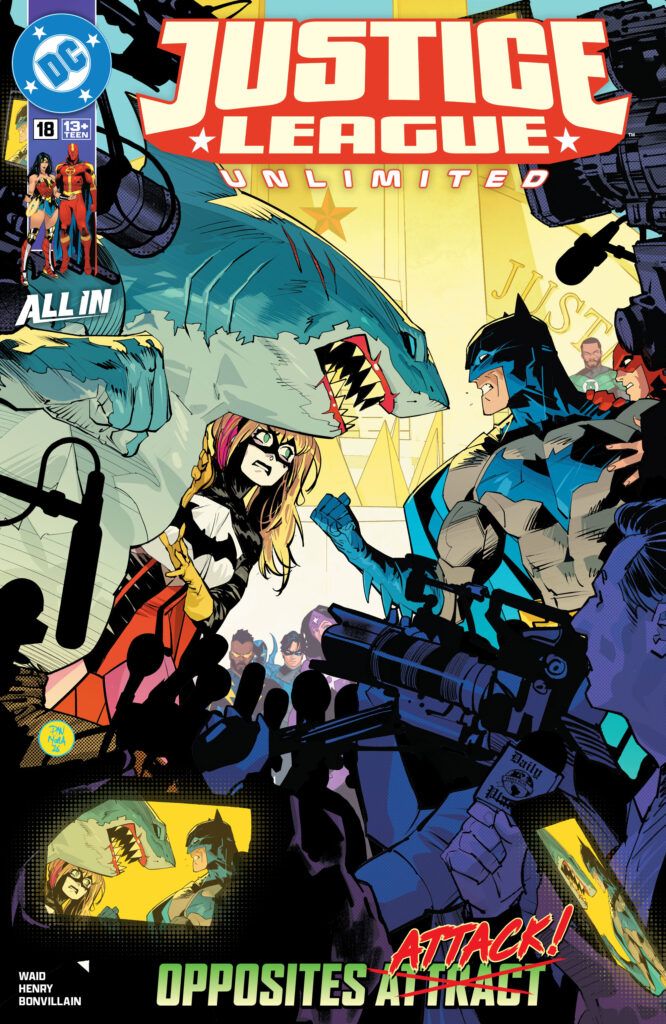
The main cover, “Opposites Attract Attack!” by Dan Mora, captures the tension perfectly, with King Shark and Batman facing off outside the Hall of Justice as reporters swarm the scene—highlighting just how fragile this alliance really is. The composition places the confrontation front and center, making the moment feel immediate and unavoidable.
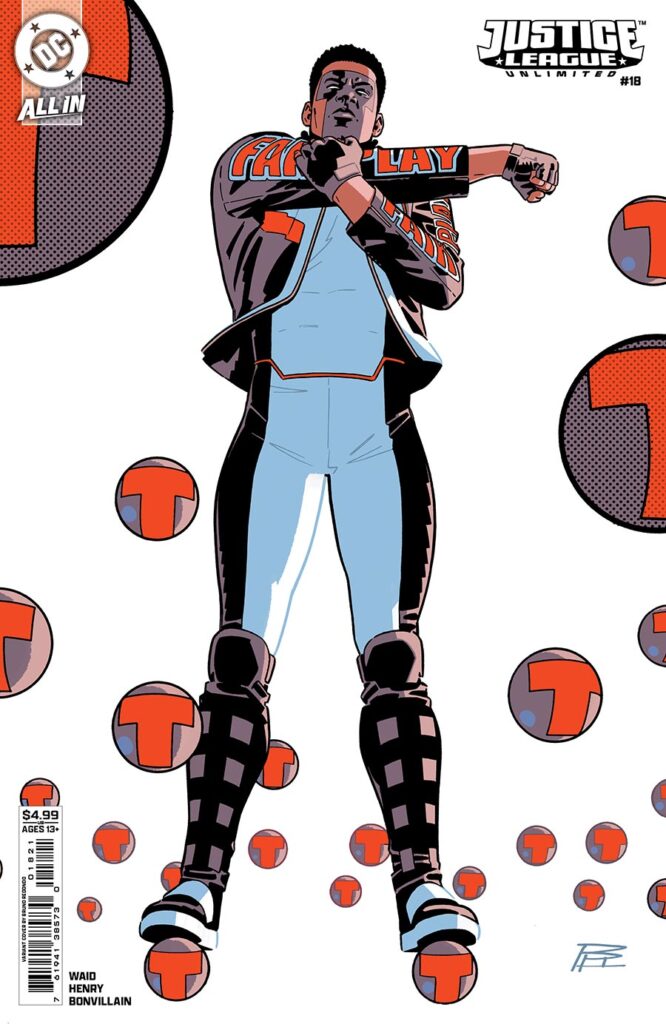
The variant by Bruno Redondo, places Mr. Terrific front and center, confidently hovering on his T-Spheres (with many more at his beck and call) and ready to put his “Fair Play” motto into action. The clean design and focus on his posture reinforce his intelligence, control, and readiness for whatever comes next.
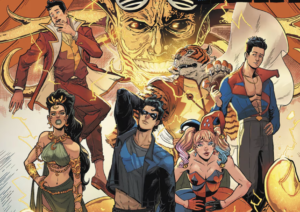
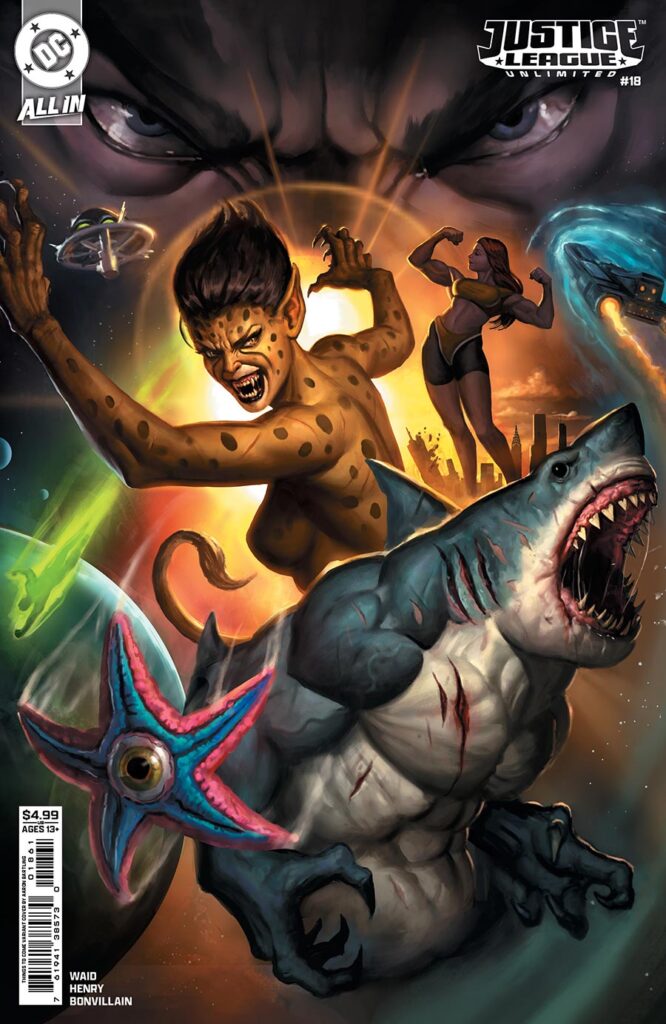
Aaron Bartling’s “Things to Come” variant shifts the spotlight to the villains, presenting a future where they may rise as heroes—or fall right back into old habits—while larger forces loom overhead. The imagery suggests that even with hope on the horizon, danger is never far behind.
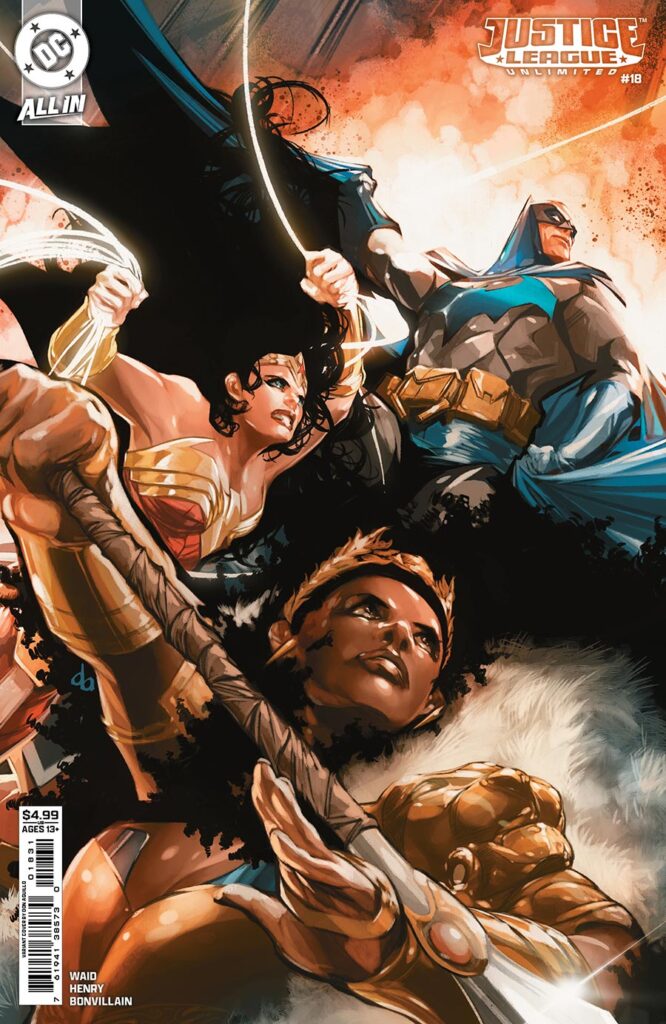
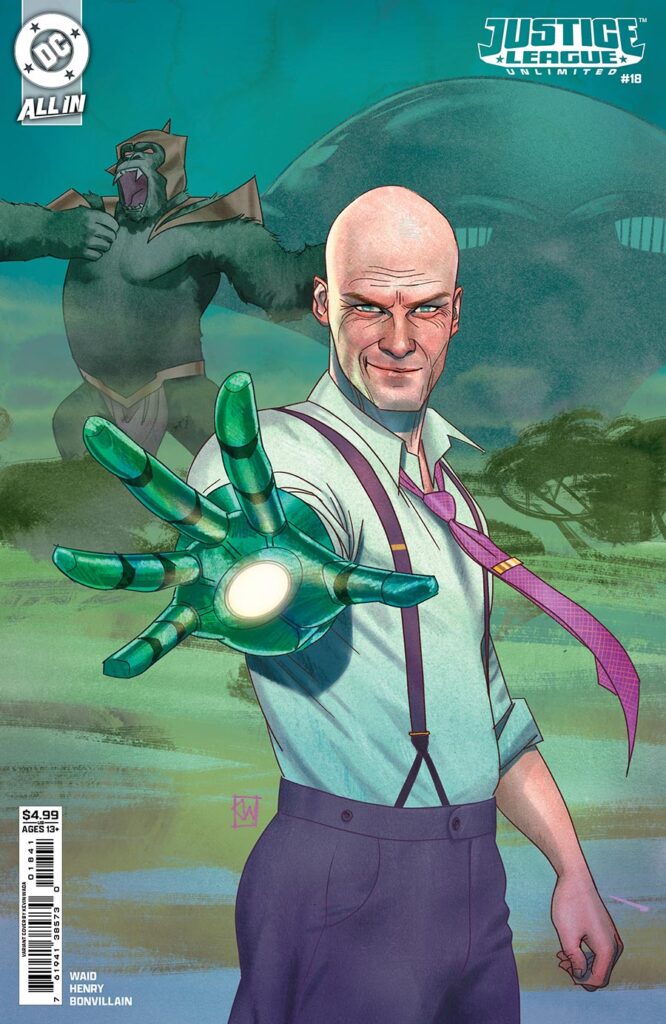
There are also variants available by Kevin Wada and Don Aguillo.
Inside the issue, the artwork is exciting and immersive. Every scene makes you feel like you are among the more than thirty characters named across the two primary locations. Henry, Bonvillain, and Maher work in strong synergy. Despite the large cast and constant movement between locations, everything remains cohesive, vibrant, and easy to follow without slowing the pace. That pacing is driven by Waid’s storytelling. He delivers just enough context for readers to feel grounded, whether they are longtime fans or new to the DC Universe. The characters are not just present as background visuals; their conversations and actions feel purposeful and reflective of what everyday life might look like for heroes—and their former enemies—trying to coexist.
One of the most compelling elements of this issue is how Superman’s gift has reshaped perspectives. Heroes and villains are forced to reconsider not only each other, but themselves. The concept of amnesty raises difficult questions. Is giving villains another chance truly justice, or is it a risk that could backfire on a universal scale? We see those questions play out in real time. The Justice League allows former villains to operate under a structured system, but without constant oversight. Watching those protocols unfold—and seeing the consequences when they are broken—adds weight to the story.
The issue also reinforces Superman’s belief that some villains can change. A testimonial from a reformed criminal turned superhero highlights that possibility. At the same time, we see what happens when a villain cannot change, choosing instead to solve problems in an unconventional—and questionable—way. Just when a moment feels noble, the story reminds you why trust doesn’t come easy.
(9/10) Justice League Unlimited #18 keeps the momentum of this story arc moving forward while balancing a large cast of characters with clarity and purpose. It delivers a compelling exploration of whether villains should be given a chance at redemption—and whether some simply cannot be trusted, no matter the circumstances. It also offers a striking reflection of the justice system through the eyes of those who repeatedly face the same threats and offenders. That perspective adds a layer of realism to an otherwise cosmic narrative.